The most expensive color appointment in Kannapolis is rarely the one with the longest service list. It is the correction — the visit where a stylist has to undo layered box dye, banding, and breakage before the color the client actually wanted can even begin. Corrections take multiple visits because each shortcut and each undisclosed layer adds a problem that has to be solved in sequence. This is a piece about the cost of neglect, paid not in dollars but in time, length, and options.
Your stylist asks about your color history at the start of an appointment because that history is still physically in your hair. Knowing it early is the cheapest protection there is.
How a small problem becomes a big one
It usually starts innocently. A box dye goes on a little darker than the package suggested. A second box, a few months later, refreshes the roots and gets pulled through the ends, adding another layer where the hair is oldest. A third attempt tries to go lighter, and box dye cannot lift box dye evenly, so the result is warm, patchy roots and dark ends. Each step made sense alone. Together they build a strand with three different chemical histories along its length, and any new color applied over it reads all three.
Metallic salts, found in some box formulas, make the problem less predictable. They can react with professional products in ways that produce unexpected warmth, uneven lift, or weakened hair. Henna creates a different version of the same issue, coating the strand so later services behave unpredictably. None of these are reasons a stylist will scold you. All of them are reasons the first question is about history.
The waiting that makes it worse
Neglect has a second form here: seeing the problem and covering it again. When a color comes out brassy or uneven, the instinct to fix it at home with another box is strong, and it is the single most reliable way to turn a one-visit correction into a three-visit one. Every additional layer adds pigment the stylist must remove and adds processing the hair must survive.
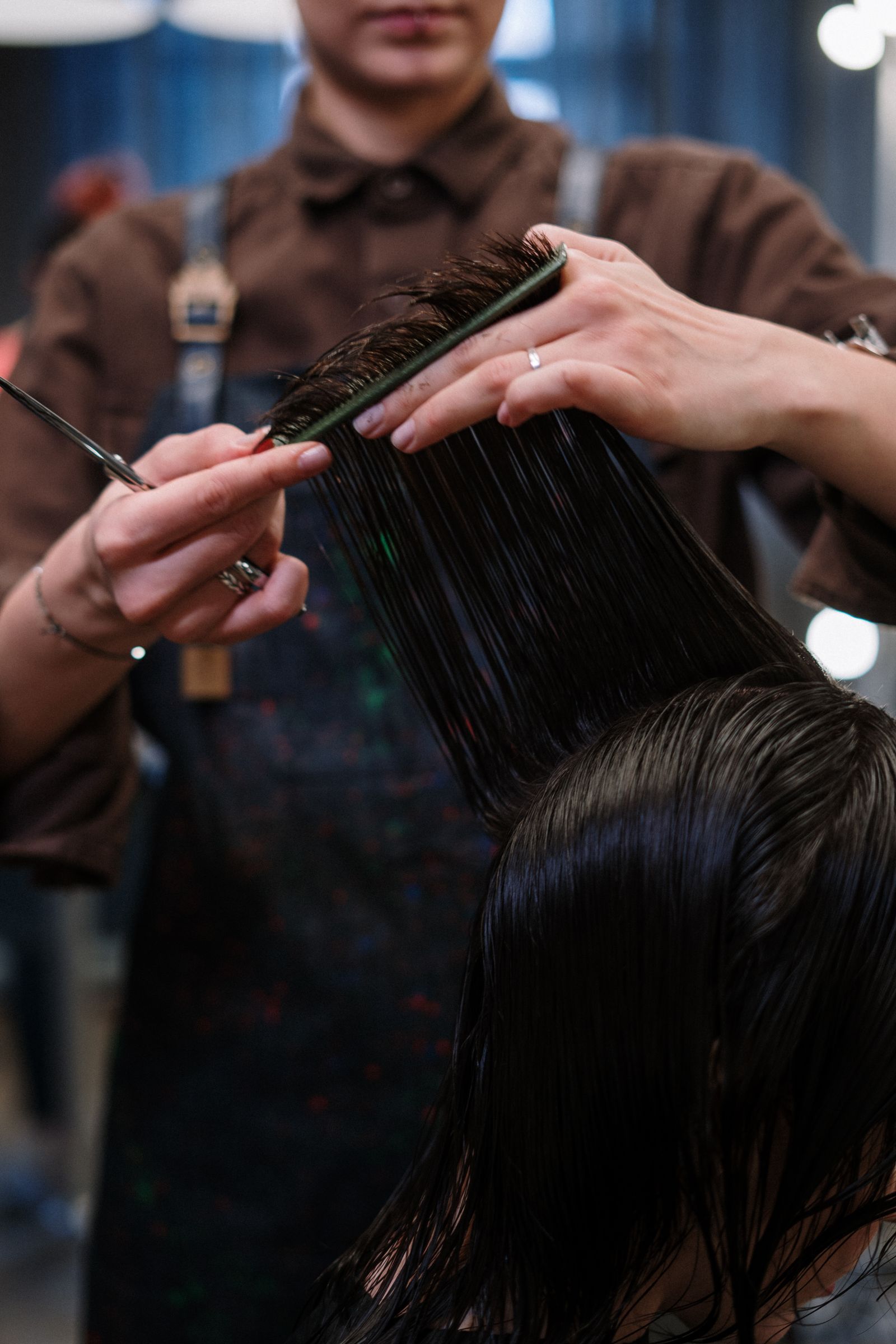
Waiting also costs length. Hair under repeated dye layers gets drier and more fragile at the ends. By the time a correction begins, those ends often cannot survive lightening and have to be cut. A client who comes in after one disappointing box has options. A client who comes in after a year of covering problems arrives with hair that dictates the plan, and the plan usually starts with scissors.
What a correction actually involves
The stylist assesses the bands — the visible stripes of different colors along the hair, and runs a strand test to see how the hair lifts and whether it stays strong. Then the work is staged: removing or lightening built-up pigment, evening the base, conditioning between steps, and toning to the target once the hair allows it. Sessions are spaced so the hair can be assessed honestly between them. Rushing all of it into one long day is how hair breaks.
The two-minute habit that prevents most of it
Keep a simple record. When you color at home, note the date, brand, and shade, and tell any stylist the full list, going back as far as the hair on your head, usually two to three years for longer hair. Disclose the dark phases and the henna even if they feel long gone. At The Final Touch Hair Studio, that two-minute conversation at the start routinely saves a client a visit at the end, because the first plan is built on what is actually in the hair.
And if a home color goes wrong, stop. Wear it for a week, condition it, and book a consultation. The pause feels like doing nothing. It is actually the most valuable move available.
Common questions
Why can't a correction be done in one visit?
Layered pigment has to be removed in stages and the hair's strength checked between them. Forcing it into one session risks breakage that takes far longer to grow out than the correction would have taken.
I only used box dye once. Is that a problem?
Usually a manageable one, especially if you disclose it. A single layer is far simpler to plan around than repeated layers, and a strand test will show how it lifts.
Does box dye eventually wash out on its own?
Permanent box dye grows out rather than washing out. Until the dyed length is cut off, it affects any color or lightener applied over it.
Photos in this guide are representative stock images.
← All guides from The Final Touch Hair Studio← Back to The Final Touch Hair Studio